KZ ZS10 Pro vs ZS10 Pro 2
Amazon links in this article are affiliate links. As an Amazon associate, I earn from qualifying purchases.
Differences Summary
Both the KZ ZS10 Pro and ZS10 Pro 2 are incredible in-ear monitors in terms of sound and comfort. Here are some the main changes:
ZS10 Pro (purple) and ZS10 Pro 2.
Audio equalizer. The ZS10 Pro 2 has four tuning switches that can be used to adjust the sound.
The ZS10 Pro comes with all silicone ear tips. The ZS10 Pro 2 also comes with silicone tips, but it includes one foam tip as well. This greatly affects comfort.
The nozzle lip on the ZS10 Pro 2 has more protrusion which makes replacing the ear tips more difficult.
Audio
I measured the frequency response of these IEMs with their silicone tips with my miniDSP EARS (not industry standard). The measurements differ from Knowledge Zenith’s (KZ) official graphs, so I’ll share both for context.
More importantly, I’ve been using both devices for several months, so I have a good amount of experience with them now.
ZS10 Pro from kz-audio.com.
ZS10 Pro 2 from kz-audio.com.
Using the ZS10 Pro stock and the ZS10 Pro 2 with all EQ switches down, the ZS10 Pro has significantly more bass as expected. It’s not overly strong, but it can produce some thump when the audio mix calls for it. The midrange is very natural on both which makes vocals sound realistic.
To my ears, the treble is far more pronounced than KZ’s graphs suggest. That said, it doesn’t sound like it spikes quite as high as my measurements. I would describe both as having similarly prominent treble, but not too piercing.
When gaming, I found both to have impressive sound separation, and it was even better on the ZS10 Pro 2. Both have a narrow soundstage, but it didn’t limit my ability to isolate individual sound cues at all.
My Measurements and Tuning Switches Explanation
(Don’t mind the treble spike much on my measurements, as I’ve been told this is a common issue measuring IEMs specifically on the miniDSP EARS)
The most interesting part of the ZS10 Pro 2 is the physical tuning switches. In the graph above, I’ve labeled a measurement with the switch on as “U” for up and “D” for down if it’s off. The only switch that didn’t seem to do anything for me at all is #4.
4-level custom tuning switch. You need the included pin to adjust them.
The changes are pretty subtle and even with all switches up, the ZS10 Pro 2 isn’t suddenly going to have thunderous bass. It will just sound closer to the original ZS10 Pro in the low end.
Overall, I love the sound of both IEMs. I prefer the ZS10 Pro for most use cases because of the fuller bass and sub-bass. However, for competitive FPS games like Call of Duty, I love the incredible detail achieved with the ZS10 Pro 2.
Impedance Sensitivity
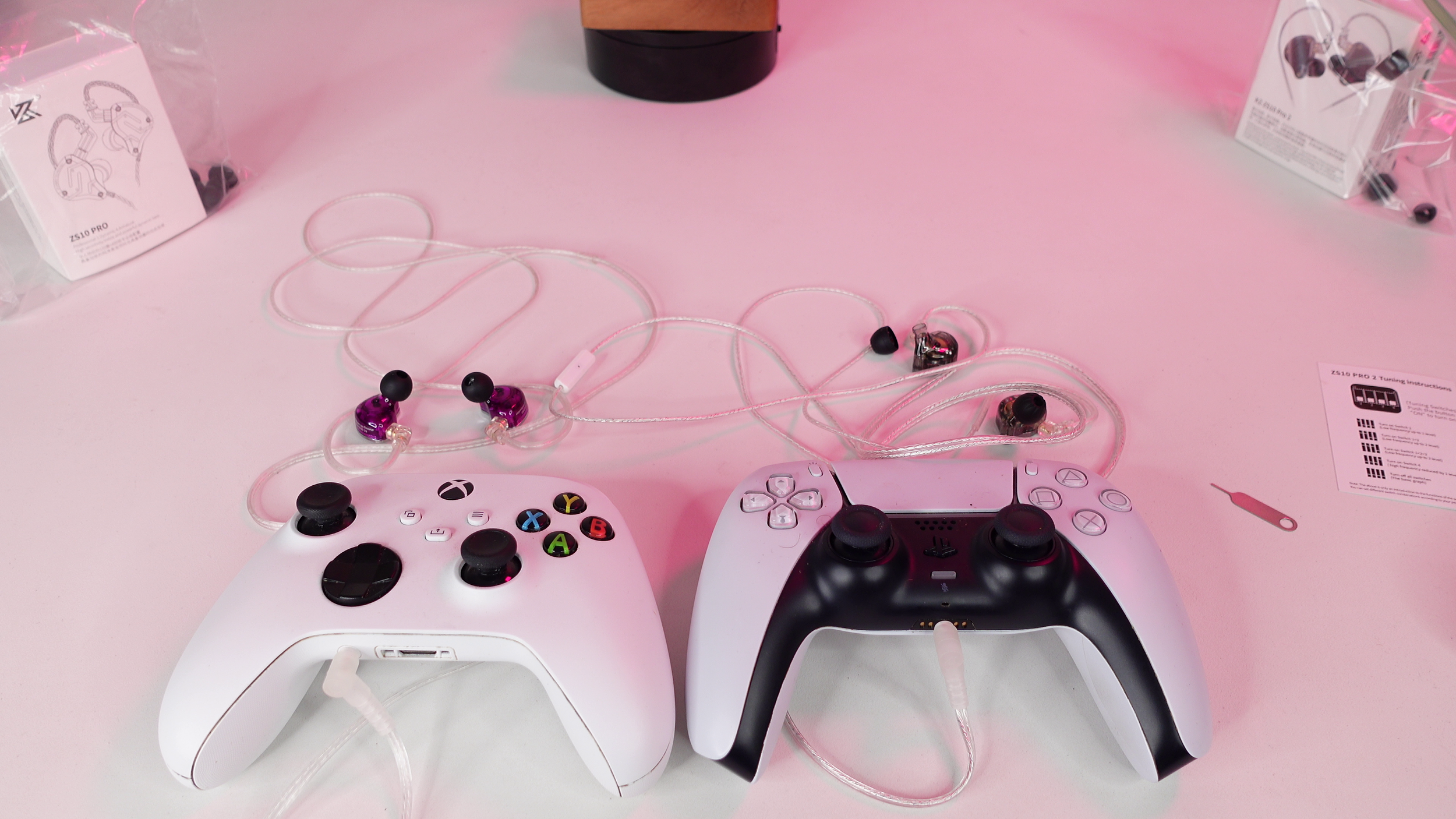
The ZS10 Pro has an impedance of 30 ohms and the ZS10 Pro 2 has an impedance of 25-28 ohms. Those numbers don’t seem like much of an outlier, but in practice both IEMs are incredibly sensitive. The level of electronic feedback you hear in these will greatly vary depending on what you plug them into. Here are some examples:
My motherboard: silent.
Astro MixAmp Pro TR: silent at 35% gain or lower, then the noise floor ramps up quickly.
PS5 and Xbox Series controller: high feedback.
Most gaming headset DACs: high feedback. A big exception is the one that comes with the HyperX Cloud III.
Elgato Wave XLR (low impedance mode): high feedback.
This is not an extensive list, but my takeaway here is I don’t really recommend either of these for console players who will be plugging their IEMs directly into a controller.
Microphone Demonstration
You can get these IEMs with a cable that has a mic or one without the mic. I only got the mic on the ZS10 Pro 2, but the cables are basically identical. This isn’t directly about the IEMs themselves - just the included cable.
On the reverse side of the mic is a media control button for phones.
Comfort and Build
Both IEMs have clear plastic on the inside and metal on the outside. They are using pretty much the same wire which is 45 inches long before the ear loops. I’ve yet to find an IEM wire that perfectly loops around my ears, but after some time both of these did at least mold to them a little bit.
The silicone ear tips feel identical and they’re snug when they’re actually on. The ZS10 Pro comes with four pairs of silicone tips (three of them have ridges). The ZS10 Pro 2 comes with three silicone tips and one foam tip.
Foam tips on the ZS10 Pro 2.
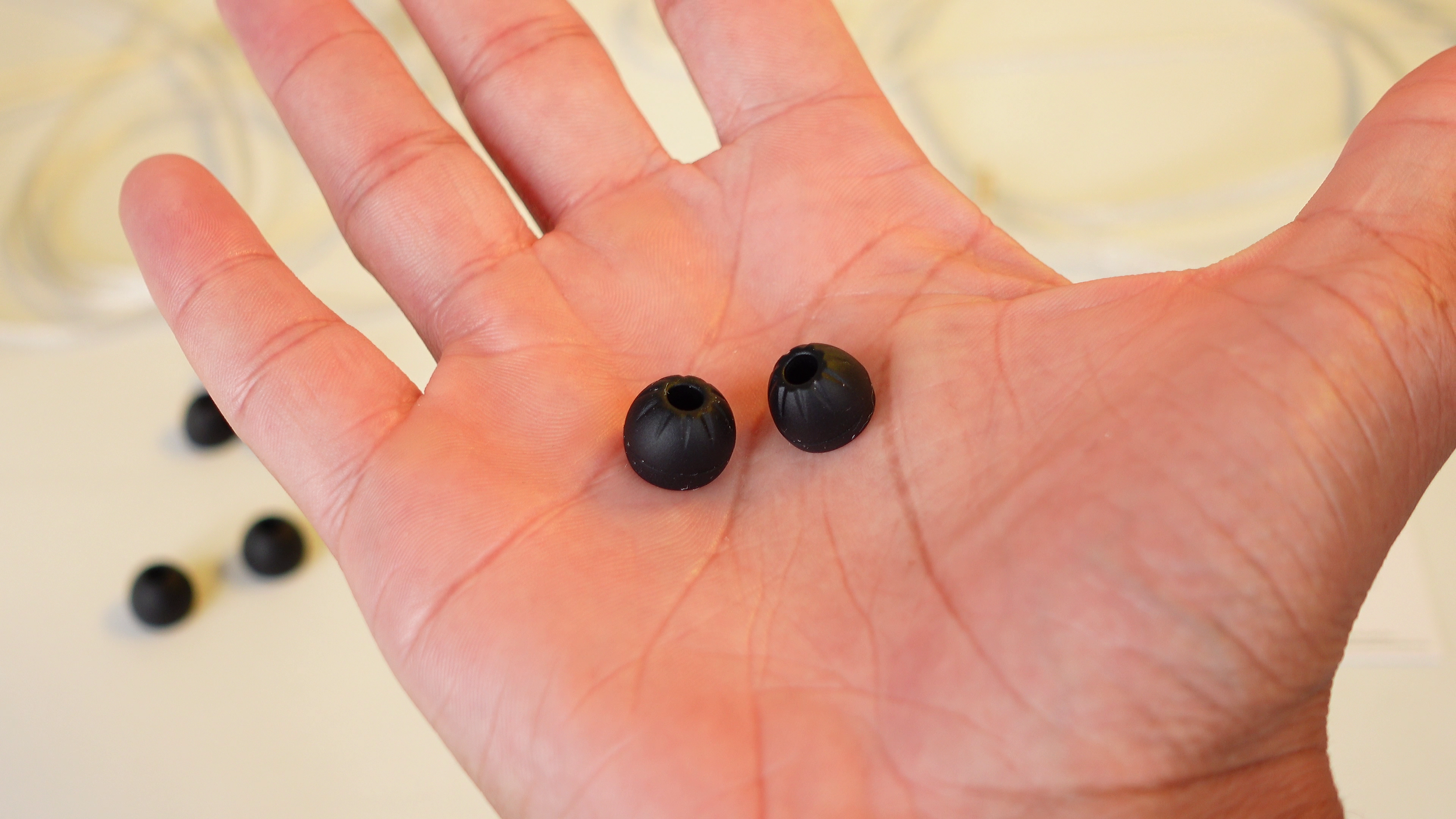
Both IEMs have three of these tip pairs.
The foam ear tips are an amazing idea, but I don’t like them. They’re sticky, they can be heard expanding as they mold to the shape of an ear canal, and they just tend to get stuck inside the ear. Some people love them. I just like that they exist.
Another differences is the nozzle lip on the ZS10 Pro is smooth with minimal protrusion. The ZS10 Pro 2 nozzle lip is much wider. This makes replacing the ear tips a massive pain. The KZ Saga is also like this. Be careful not to damage the grille when trying to switch tips.
When I finish my video review, I will upload an example of how to get the tips on best.
Lastly, the grille protecting the inside of the IEM is solid on the ZS10 Pro and more of a mesh on the ZS10 Pro 2 which makes the latter more susceptible to damage.
ZS10 Pro.
ZS10 Pro 2.
Verdict
Overall, there’s not a wrong choice here. Both the KZ ZS10 Pro and ZS10 Pro 2 are excellent. I still prefer the ZS10 Pro because of its slightly fuller bass and thinner nozzle lip. However, if you want to hear the maximum amount of detail possible, moving up to the ZS10 Pro 2 is a good option.